
Our live updates in social networks
Be the first to know about new opportunities right next door or abroad. We tell you right away what is in store for you and how to go for it.

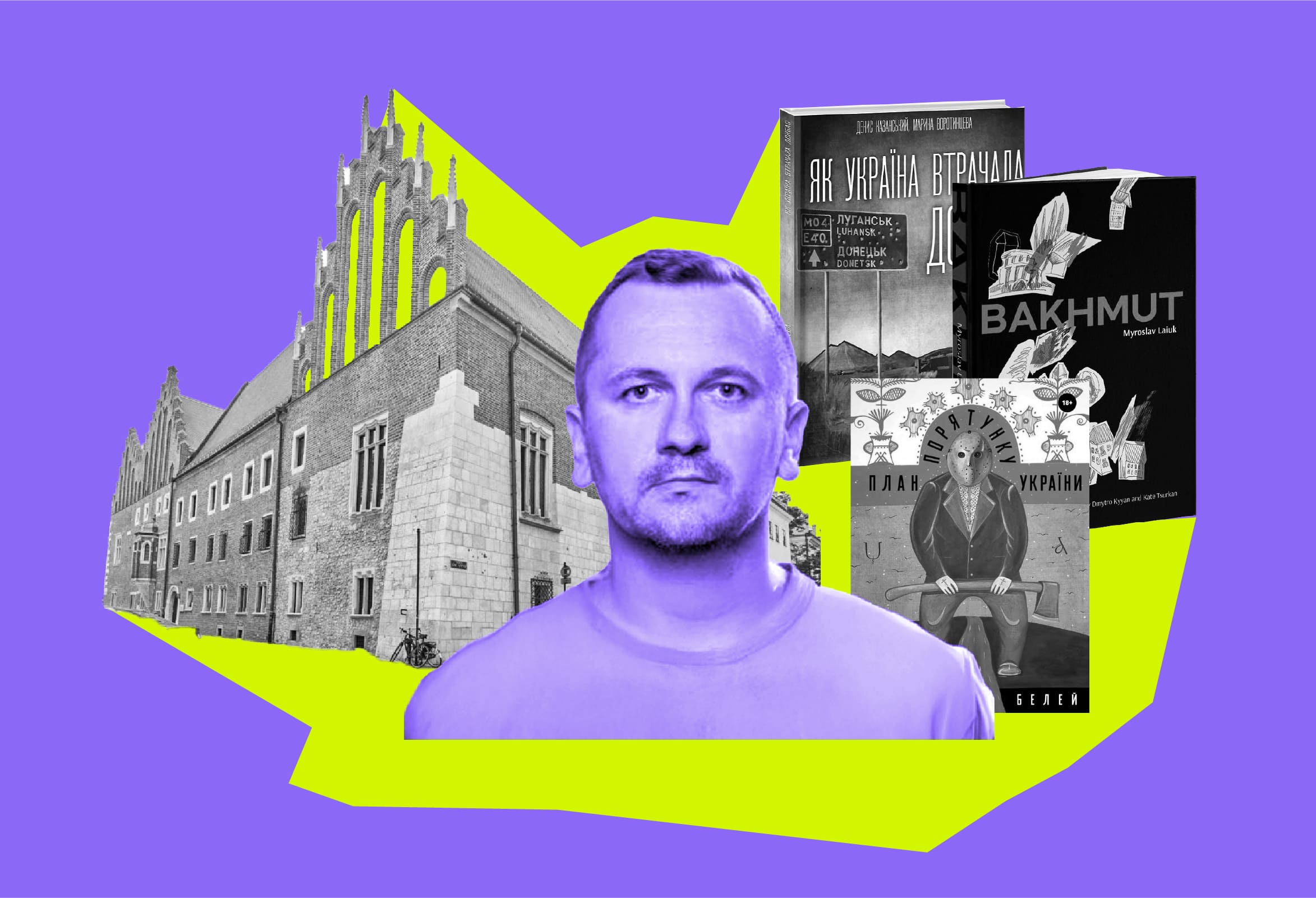
Over the past two decades, Kraków-based literary scholar and publisher Piotr Marecki has been among the first to systematically introduce contemporary Ukrainian literature to Polish readers. Since the early 2000s, his publishing house, Ha!art, has released more than a dozen translations of Ukrainian authors, long before Ukrainian literature became visible in Poland after 2014 or 2022.
Many of them were supported by the House of Europe Translation Grants, including 'Bakhmut' by Myroslav Laiuk or 'Plan of Rescuing Ukraine' by Les Beley. In this interview, Marecki reflects on the Polish-Ukrainian literary collaborations, the challenges of translating Ukrainian (war) literature, and the changes in literature and language brought by migration and identity shifts on both sides of the border.
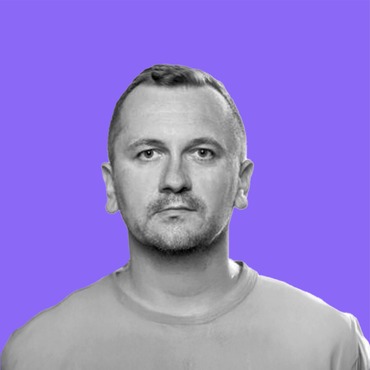
We established our publishing house 26 years ago, in 1999. At first, we worked on a magazine that focused on contemporary Polish literature, but later on, we broadened our thematic scope. We began collaborating with many translators and editors to prepare issues on Central and Eastern European literatures, including post-Yugoslav, Czech, and Ukrainian literature. The magazine was mostly run by people born in the previous century, the 1970s, and the 1980s. We were the youngest generation in Polish literature. By publishing works by Polish contemporary writers, we introduced new topics to the Polish public sphere — themes that had never been touched before by previous generations.
After the Orange Revolution in 2004, we began work on an anthology of Ukrainian poetry — 'Cząstki pomarańczy. Nowa poezja ukraińska' (Orange Segments. New Ukrainian Poetry). Published in 2011, this 750-page book translated by Anetę Kamińską included works by Oksana Zabuzko, Viktor Neborak, Jurij Izdryk, Nazar Honczar, Marianna Kijanowska, Marjana Sawka, Oksana Łucyszyna, Andrij Lubka, and many others. There were other publishers, such as Czarne, that also translated a few Ukrainian authors, including Yurii Andrukhovych and Yuriy Izdryk, but our volume covered a huge range of Ukrainian literature. For Poles, it was eye-opening: it offered access to a landscape of contemporary Ukrainian literature that had previously been unavailable to them.

One of the first Ukrainian translations we published was 'Dziesięć słów o ojczyźnie' (10 Words about Motherland) by Oleksiy Chupa. It was translated by Katarzyna Kotyńska in 2016. At that time, we also came up with the idea of publishing a series of books about Poland by authors who had never visited the country. And Chupa wrote such a book about Poland, and in particular, Warsaw. He wrote it from his imagination, trying to recreate how he and other Ukrainians at the time imagined Poland. To be honest, it is not a very good representation. I remember that, at the beginning of the book, when the Ukrainian characters went to Poland, they were immediately robbed at the railway station.
I teach contemporary literature at the Jagiellonian University, and I used to present my students with a list of Ukrainian authors, mostly from Western Ukraine, such as Yuriy Andrukhovych, Sophia Andrukhovych, and Yuriy Izdryk. These authors are well known among Poles, as Andrzej Stasiuk, a prominent Polish writer, promoted them to Polish readers. But we did not have much knowledge of Ukrainian authors from the East, including Russophone writers, many of whom switched to Ukrainian after the war.
After the start of the full-scale Russian invasion, we decided to publish works about Donbas and from Donbas. We realised that even people in Lviv or Kyiv were not familiar with some Donbas writers, let alone Poles. In Poland, we also have parts of our country that are largely unknown to most Poles — for example, the Podkarpacia or Subcarpathia region. There are many books and articles about it, but mostly outsiders, not insiders, write them. I think you have a similar situation in Ukraine. I know there are many books about Donbas and the war, written by English-speaking authors. For example, in Poland, one of the most popular books on this topic is 'Apartament w hotelu wojna. Reportaż z Donbasu' (Apartment in the War Hotel. Report from Donbas) is written by Tomáš Forró, a Slovak journalist. For us, it was very important to get an insider’s perspective on Donbas, which is why we started a series of books about how Ukrainian writers represent it.

We have already published 'How Ukraine lost Donbas' by Denis Kazansky and Marina Vorotyntseva, 'Bakhmut' by Myroslav Laiuk, and 'Plan of rescuing Ukraine' by Les Beley with the support of the House of Europe. When we started publishing these books, our translators faced challenges they had never faced before. For example, when we were publishing Les Beley’s collection of stories, at first, translators told me, 'We can translate from Ukrainian, but we are not able to translate from surzhyk.' But eventually, we managed to publish the book and, in doing so, presented something new to the Polish audience. In Poland, at the beginning of the war, we had a central narrative of heroic Ukraine, presented mostly by English-speaking journalists and Western magazines. Beley’s approach was different: he used an absurd and grotesque style to describe the social and political situation in Ukraine. People were saying we should not publish it because it does not fit the mainstream narrative and presents Ukraine in a rather negative light. As the well-known artist Marta Jamróg wrote on the cover, 'If this book had been written by someone from Poland, they could have faced accusations of being anti-Ukrainian.'
In this sense, 'How Ukraine lost Donbas' by Denis Kazansky and Marina Vorotyntseva was also very important for Poles. The authors show that the transition period was extremely important and that what happened during it laid the groundwork for the war in 2014. This is where we found many links to Poland, as we faced many similar problems and conflicts in the 1990s.
The biggest problem in the Polish book market is overproduction. Hundreds of thousands of books are published every year. It is relatively easy to publish a book and deliver it to a bookstore, but it is so much harder to get readers' attention. That is why so many books are 'lost' on the market, especially when it is a translation of someone who is not known to the audience. Thus, in the situation of book overproduction, it is important to promote every new title to reach the audience that will appreciate it.
Grant support, including the House of Europe Translation Grants, helped us not only publish many Ukrainian books but also better promote them to the Polish audience. It is very expensive to organise even a couple of meetings or book a presentation and to promote the book online: prepare graphics for social media, record interviews with the author, or publish video clips about the book. With grant support, we were able to tell the story of each book we published, and it made all the difference. That is why we plan to continue applying for new grants, including those from the House of Europe, and we really appreciate these opportunities.
For example, with 'Bakhmut' by Myroslav Laiuk, we had a huge success — it was probably one of the best-promoted books in our publishing house in recent years. We organised many presentations and meetings with the author, during which hundreds of people learned about the book. Even the public channel of the Polish radio asked us if they could read this book for their audience. I can really appreciate 'Bakhmut' from a literary perspective. It is not only reportage, but also an essay written by the poet. That is why it was relevant to different communities and audiences: those who like reportage and read non-fiction were as interested in the book as those who mostly read contemporary poetry.

I regret that Serhiy Saigon's book '*khaki' is not as widely recognised in Poland, despite receiving quite a lot of reviews. His perspective is very different from what we used to read — this is not a book on the war written from a coffee shop in Kyiv; this is a perspective from the frontline.
The book's language is very interesting, as it features many new words and expressions that emerged in the context of the war, and our translator, Aleksandra Brzuzy, had to learn their meanings from Saigon. We tried to bring Saigon for the book presentation as well, but it was not possible because he is an active soldier. We held the presentation in Pałac Potockich, a very posh place in the historical center of Kraków, and Saigon joined us online from the frontline, smoking lots of cigarettes. It was a startling contrast.
Although the topic of the war was very hot for several years, I know from bookstore owners that people are a little bored with war books. There are many memoirs, reportages, anthologies, and other books about war, and it is increasingly difficult to sell them. That is why we have to offer alternatives. Next year, we are planning to publish something different. For example, we are working on a translation of Pavlo Stekh's book, 'The Catcher in the Rust'. Pavlo is also an active soldier, but his book is not about the war — it is a travel diary written from 2016 to 2018, based on his conversations with ordinary people in electrychkas.
The fact that we have several million Ukrainians living in Poland means that not only our society but also our language is going to change. For example, in the university where I work as a professor, even before the war, we usually had around 10% of the Ukrainian students, and there is so much more. Some of them return to Ukraine; some stay in Poland. Some of these Ukrainian students are extremely talented, and when they start writing, they sometimes do it in Polish. That is why I think that, in the next few years, in Poland we will have many writers of Ukrainian origin writing in Polish, and this will probably open a new trend in Polish literature.

I will give you two examples of what I mean. Recently, we published two poetry books by Yuriy Zavadskiy, a Ukrainian poet and translator based in Ternopil, but they were not translations — they were written in Polish. From a linguistic perspective, it is fascinating, as this Polish is not perfect. The editor of these books, also a poet, decided against improving Yuriy’s Polish and left it as is, with all these 'mistakes.'
Ivan Davidenko is also a good example. He is a Ukrainian who moved to Poland years ago. Recently, he published a collection of poems in Polish and received the most prestigious Polish poetry prize for a debut. We are considering collaborating with him, so maybe he will translate something for us. This would be very interesting if a person who learned Polish translated something into Polish, as even though it is not his native language, he knows it perfectly.
We live in very interesting times when a lot of things happen, and we will have new visions of literature, new visions of language, new visions of everything! I am waiting to see how these language changes start to manifest in literature in new poetics and literary styles.
Text: Nadiia Chervinska
Translation into Ukrainian: Irina Goyal
Photo: Piotr Marecki


It seems you are using Internet Explorer. Please consider browsing with Safari, Google Chrome or Mozilla Firefox for a better user experience with our website.